Designing Healthcare Systems that Work Under Pressure
Healthcare systems operator · Builder of women's and children's services · Hospital development.
Discuss a healthcare project
Healthcare succeeds because systems support people — not because people compensate for broken systems.
The foundation of reliable care is not just hard work; it is architecture. By aligning human capability with structured workflows, we create environments where doing the right thing becomes the easiest thing to do.
Skilled clinicians doing their best within whatever structure exists.
Clear roles, escalation and protocols that carry the routine decisions.
The same standard on a quiet Tuesday and a full weekend night shift.
Measured improvement that holds after the project ends.
Women's & children's hospitals
Comprehensive system design for specialised maternal and paediatric care environments.
Read about hospital development ›Neonatal & paediatric services
Optimising high-acuity neonatal workflows to reduce variance and improve outcomes.
Read about neonatal services ›Hospital commissioning
Strategic oversight from blueprint to operational readiness, so a new unit opens safely.
Read about commissioning ›Quality & safety
Embedding rigorous safety protocols into daily routines to prevent systemic failure.
Read about quality & safety ›Clinical teams
Developing resilient leadership and cohesive team dynamics under clinical pressure.
Read about clinical teams ›Simulation
Stress-testing systems through immersive clinical simulation before real-world deployment.
Read about simulation ›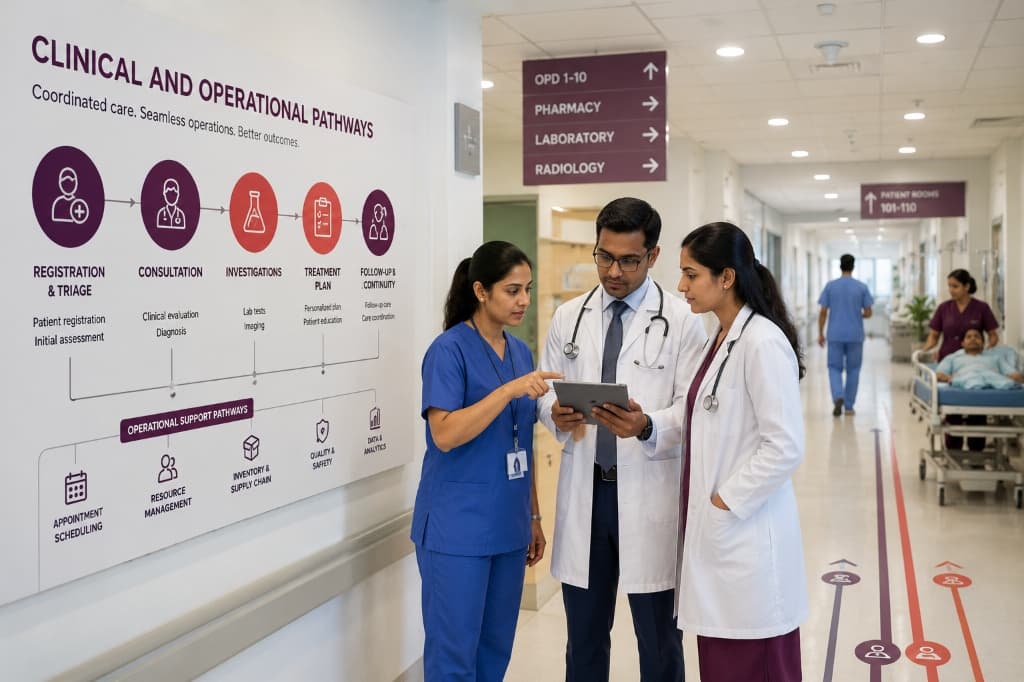
Women's and children's hospital development
Women's and children's healthcare requires several services to function as one connected system. Obstetrics, neonatology, paediatrics, emergency care, intensive care, surgery, nursing and support services cannot work in isolation.
I support organisations in developing and integrating these services across clinical service planning, patient pathways, workforce and recruitment planning, clinical governance, nursing systems, referral development, quality and safety, operational readiness, patient experience, and service performance and growth.
My deepest clinical and operational experience is in neonatal and paediatric care, combined with the coordination required across maternal and child-health services.
Neonatal and paediatric services
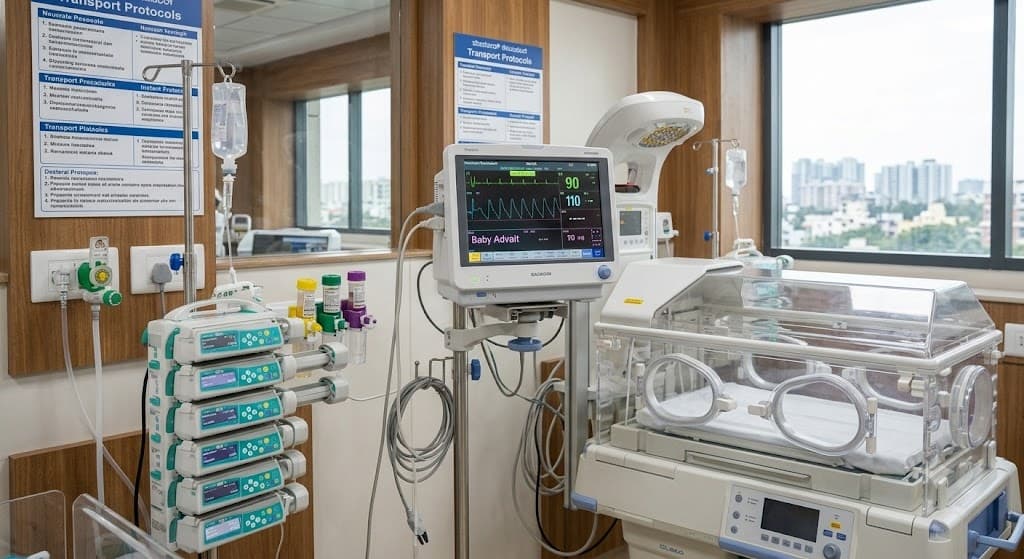
I have established, expanded and led multiple Level III neonatal intensive care units, building the clinical protocols, staffing models and escalation pathways that allow a unit to care safely for extremely preterm and critically ill newborns.
This work includes neonatal transport, developmental follow-up, high-risk newborn care, resuscitation training, nursing competency frameworks and the day-to-day quality systems that keep standards consistent between shifts and between teams.
Hospital commissioning and clinical planning
Commissioning a new hospital or unit is where clinical intent meets physical and operational reality: bed configuration, equipment specification, staffing plans, workflow design, medical records, procurement, licensing and readiness testing.
I work with promoters and executive teams to make sure the clinical model drives these decisions, so the service that opens is the service that was intended.
“The true measure of a healthcare service is how reliably it performs on an ordinary busy day.”
Quality improvement and patient safety
Quality improvement has been a defining part of my professional work. As Secretary of the Nationwide Quality of Care Network, I worked with hospitals and healthcare professionals across India on structured improvement, infection prevention, patient safety and evidence-based neonatal care.
The method is consistent: measure what is actually happening, involve the people doing the work, change the process rather than blame the person, and keep measuring after the project ends.
Building clinical teams
Services are delivered by teams, not by individuals. I have recruited, mentored and trained hundreds of doctors and nurses, and developed fellowship and postgraduate training programmes in neonatal and paediatric care.
Team development covers role clarity, escalation confidence, communication under pressure, structured handover and the leadership behaviours that make speaking up normal.

Simulation and human factors
Simulation is the safest way to find out how a system behaves when it is stressed. Running neonatal emergencies, resuscitation scenarios and crisis resource management sessions exposes the gaps in equipment, communication and escalation before a real baby is affected.
Human factors work then translates those findings into changes in layout, checklists, labelling and briefing routines.
The efficiency–quality equation
Efficiency and quality are often presented as opposites. In practice, most waste in a clinical service comes from rework, delay, duplication and unclear responsibility — the same things that harm quality.
Designing the process well usually improves both at once. Where a genuine trade-off exists, it should be an explicit clinical decision, made openly, rather than an accident of how the service happens to be organised.
Discuss a healthcare project